

Plus, quick changes you can do today to improve your chances of being seen.
You hit apply to a job that is collecting resumes on the LinkedIn platform. Have you ever stopped to think about what the recruiter sees? Is it your full profile? Project write-ups? Resume?
Nope. None of those.
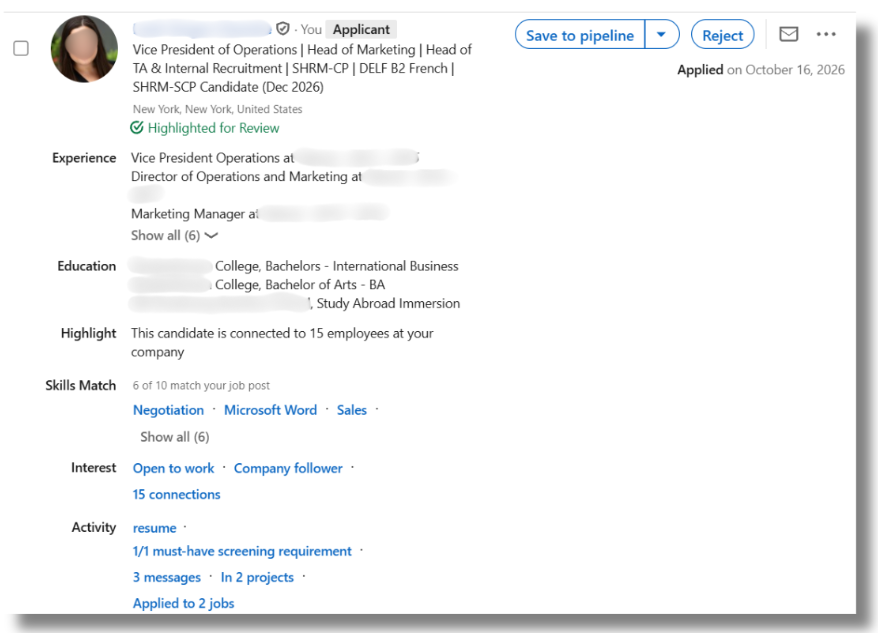
Applications come into jobs as a condensed candidate profile card – one that has already had AI applicant targeting filters applied. Your profile is being scored before the recruiter has viewed the card.
The Challenge for Technical Talent
This condensed card presents a specific problem – the things you’re proud of, like architectural decisions and migrations you’ve led, don’t fit the snapshot. AI doesn’t reward any of these accomplishments that matter in the real world. Your job is to get titles, scope, and stack across in a very small space.
The Breakdown: What’s on the Card
- Experience. Current or recent titles, years of experience, recent employment dates & roles at your current company. This is at the top of the card.
- Skills Match. Skills overlap with the job’s required skills and shown as a match – i.e. 8/10 skills match. Recruiters hover over a skill to see which job they’re attached to. A skill without a role is a keyword. A skill tied to a job reads as real.
- Interest / likelihood of response. These are signals – open to work, active talent, interest in the company. Will you reply if they reach out?
- Spotlights. These are tags that separate you from similar candidates.
- Open to Work. Shows you’re an active candidate looking for a change.
- Actively Engaged in the Job Market. Shows candidates who recently updated their profile, chose to share their resume, or have been in a role longer than average. Plus, it shows whether they are actively applying to jobs.
- Company Connections. Shows applicants with 1st degree connections with employees at the company. This can be a big deal for engineers where referrals and networking are a key source of finding a new job.
- Verified Applicant. New this year, it combats the “fake profile” epidemic that has increased via fake and AI-generated applications. A verified applicant = a real person.
First Steps to Improve your Profile Card
- Title. Internal titles mean very little to LinkedIn’s search or to a recruiter scanning hundreds of resumes. You’ll be pushed down the list if your real title doesn’t match the market term that a recruiter has searched for. Put your market-standard title in your headline and add your internal title in parentheses.
- Load the Headline with One Stack and One Proof Point. Your headline is prime real estate. Use it to it’s potential.
- Attach Your Skills to a Job. Keyword ranking is determined by context verified skills and content that are linked directly to a role or accomplishment at a job.
- Share Resume. Turn on “share resume” with recruiters. It makes it searchable and feeds titles & skills into the card.
De-emphasize
- Skills you can’t defend or that no target posting asks for. Don’t dilute your profile.
- Vague soft-skill filler in the headline – i.e. results-driven.
- Buried key technologies. If your main language is three roles deep in a description, it may not surface, bring it up.
- Tutorials, bootcamp certificates, or a wall of unrelated skills that make your profile read unfocused to LinkedIn’s matching.
The Bottom Line
Your headline, verified profile, connections, shared resume, and core (verified!) skills are the keys to creating a candidate card that passes AI filters and gets the recruiter’s attention. You aren’t gaming the system; you’re making sure that the most relevant slice of your engineering value fits into the snapshot you’re allotted.
Learn more about streamlining your professional profile.
